
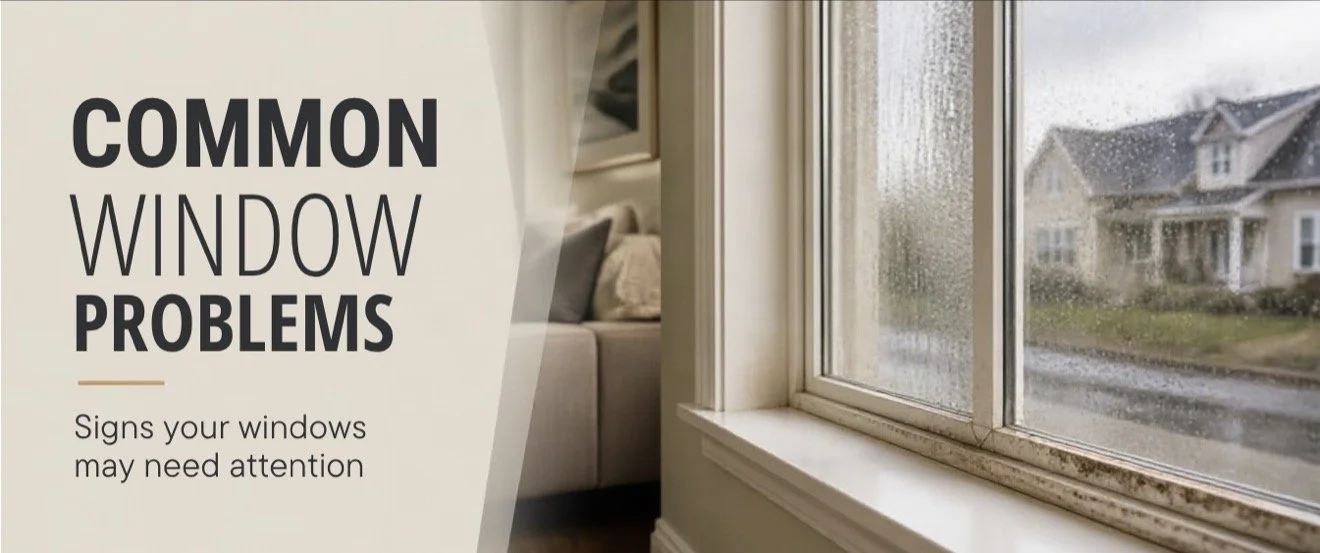
Small window issues can affect more than appearance. A draft can make a room uncomfortable, moisture can lead to damage, and a damaged window may leave your home less protected from the weather.
The good news is that many problems have clear warning signs. This guide explains what to look for, what may be causing the issue, and when professional repair or replacement is worth considering.
Quick takeaway: If a window is letting in air or water, becoming difficult to use, or showing visible damage, addressing it early can help prevent a small problem from becoming a larger one.
Drafts and air leaks
Common signs: You may notice a cold spot near the window, curtains moving when the window is closed, higher heating or cooling use, or a noticeable temperature difference around the frame.
Likely causes:
• Worn or damaged weatherstripping around the sash or frame
• Gaps in caulking or sealant around the window perimeter
• A poorly adjusted sash, damaged frame, or aging window assembly
When to consider professional help: If a simple cleaning and latch adjustment do not stop the draft, a professional can check the seals, frame, and installation. Repair may be enough when the frame is sound; replacement may make more sense when air leakage is widespread or the window is significantly deteriorated.
Condensation and moisture
Common signs: Look for water droplets on the glass, damp sills, peeling paint, staining, musty smells, or moisture collecting between panes.
Likely causes:
• High indoor humidity combined with cold glass
• Blocked drainage paths or failed exterior sealant
• A failed insulated-glass seal, which can allow moisture between panes
When to consider professional help: Occasional interior condensation may improve with better ventilation and humidity control. Persistent moisture, water damage, or fogging between panes should be assessed professionally so the source can be identified before the surrounding wall or trim is affected.
Difficult operation or damaged hardware
Common signs: A window may stick, refuse to stay open, fail to lock, scrape against the frame, or require excessive force to open and close.
Likely causes:
• Dirt or debris in the tracks
• Loose, worn, or broken locks, handles, hinges, rollers, or balances
• A sash or frame that has shifted, swollen, or become distorted over time
When to consider professional help: Stop forcing the window if the hardware is bent, the sash is unstable, or the lock will not secure the opening. A professional can determine whether cleaning and hardware repair will solve the problem or whether the window has become too worn for a reliable repair.
Cracked, foggy, or broken glass
Common signs: Visible cracks, chips, shattered panes, persistent fogging, or a cloudy appearance between insulated-glass panes are all signs that the glass or its seal may be failing.
Likely causes:
• Impact from weather, landscaping equipment, or an accidental strike
• Stress caused by movement, temperature changes, or frame pressure
• A failed seal that allows moisture into an insulated glass unit
When to consider professional help: Broken glass should be addressed promptly, especially when it is near a walkway or accessible to children and pets. A professional can assess whether replacing the glass unit is appropriate or whether damage to the frame makes full window replacement the safer long-term option.
Storm damage
Severe weather can create several window problems at once. Storm damage may include broken glass, damaged frames, leaks, or compromised seals, even when the damage is not immediately obvious.
Common signs: Check for cracks or shattered glass, bent or separated frames, water around the opening, drafts after the storm, loose trim, or a window that no longer opens, closes, or locks properly.
Likely causes: Wind, hail, falling branches, flying debris, and pressure from heavy weather can damage the glass, frame, hardware, and seals independently or together.
What to do next:
Document the damage with clear photos and notes as soon as it is safe to do so
Keep people away from broken glass and protect the opening only with safe temporary measures
Arrange a professional inspection promptly to identify hidden damage and determine whether repair or replacement is needed
When to consider professional help: Any storm-damaged window that leaks, will not secure, or has visible structural damage should be inspected promptly. Quick attention can help clarify the full scope of the problem and reduce the risk of additional water or weather damage.
Know the signs and act early
Drafts, moisture, operating problems, damaged glass, and storm damage can all affect comfort, efficiency, and protection from the weather. Pay attention to changes, document visible damage, and address problems before they spread to surrounding trim or walls.
If you are unsure whether a window needs a repair or replacement, contact Roof & Deck Co. for a professional window assessment and a clear recommendation for the next step.