
By Preston White · October 12, 2026
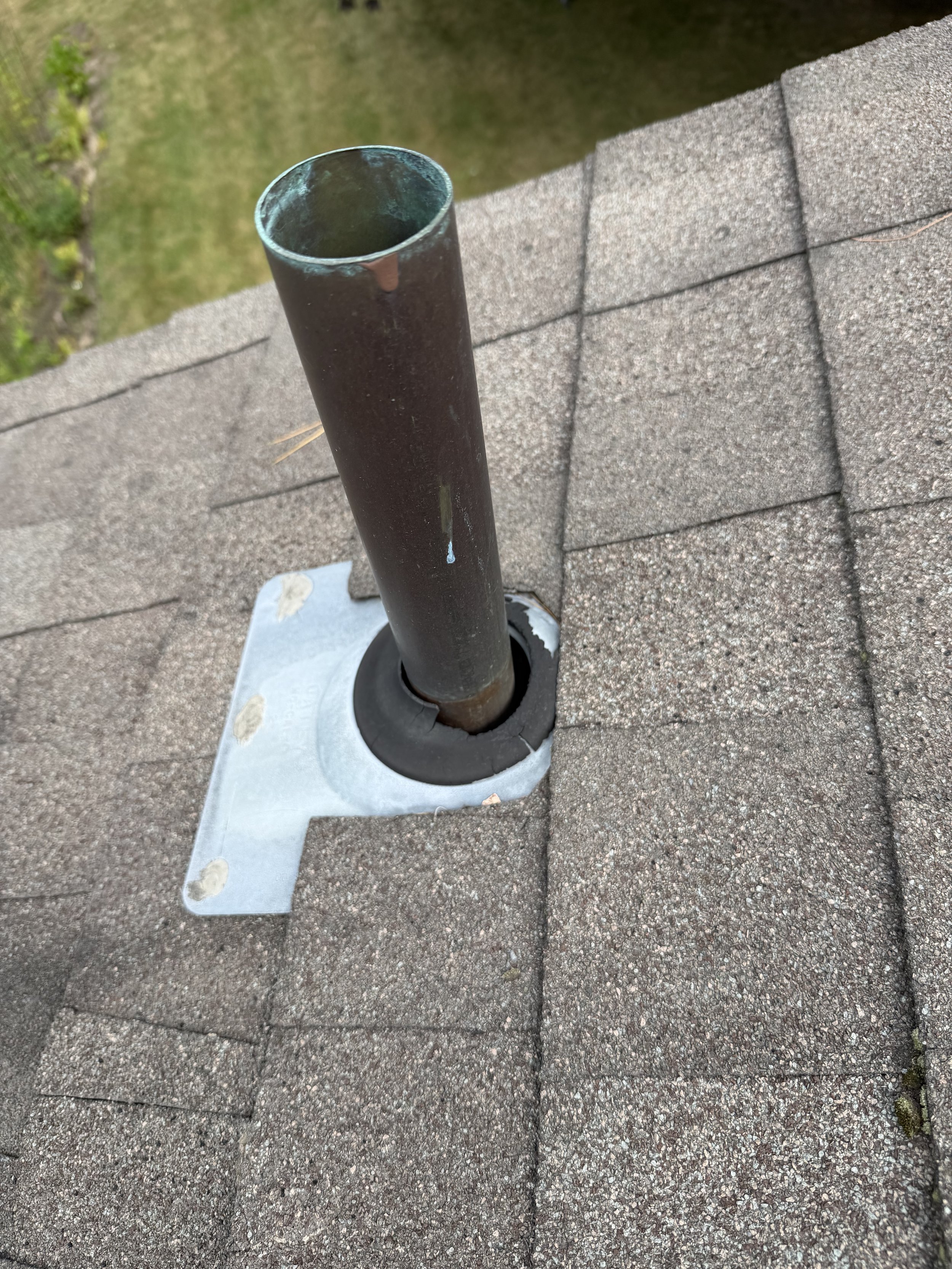
Pipe Issue Causes Roof Leak
Plumbing vent pipe on an asphalt shingle roof with a worn, cracked rubber boot around its base. A worn pipe boot like this one is a small part that can let a lot of water in
Most roof problems start small and get expensive only when nobody notices them. Catch them early, and a quick repair usually beats a big bill.
Your roof works hard every day, shrugging off sun, rain, wind and snow so the rest of your home stays dry and comfortable. Whether you're a homeowner keeping an eye on your own house or a contractor walking a client's roof, knowing the usual suspects makes every inspection faster and every conversation easier. Here are the issues we see most often, how to spot them, and what to do next.
1. Roof leaks
Leaks are the number one reason people call a roofer, and they're rarely where the drip shows up. Water can travel along rafters or decking for several feet before it finds its way into a ceiling.
Signs to watch for:
Brown or yellow stains on ceilings or upper walls
Peeling paint or bubbling drywall
Damp insulation or a musty smell in the attic
Daylight peeking through roof boards
Homeowner tip: After a heavy rain, take a flashlight into the attic and look for wet spots or dark streaks on the wood. Snap a photo so your roofer knows exactly where to look.
Contractor tip: Trace the water uphill from the stain. The real source is often a penetration, a valley or a flashing joint above where the leak appears.
2. Missing, cracked or curling shingles
Shingles are your roof's first line of defense, so one missing tab leaves the layers underneath exposed. Wind, hail, sun and plain old age are the usual culprits.
Signs to watch for:
Bare spots or shingles lying in the yard after a storm
Edges that curl up or corners that cup down
Cracks, tears or bald patches where the granules are gone
A pile of granules at the bottom of your downspouts
Homeowner tip: You don't need to climb up there. A pair of binoculars from the yard (or a quick drone photo) is a safe way to check after a big storm.
Contractor tip: Widespread curling or granule loss usually points to age or poor ventilation, not just a bad shingle. Mention it to the homeowner so a spot repair doesn't hide a bigger problem.
3. Damaged or loose flashing
Flashing is the thin metal that seals the seams around chimneys, vents, skylights and walls, and it's behind a big share of leaks. Over time it can rust, lift or pull away as sealant dries out and cracks.
Signs to watch for:
Bent, rusted or missing metal around the chimney or vents
Cracked caulk or gaps along flashing edges
Water stains on the ceiling near a chimney or skylight
Homeowner tip: If a leak shows up near your fireplace or a skylight, flashing is a great first suspect. Mention it when you call for an estimate.
Contractor tip: Fresh caulk over failing flashing is a short-term patch. Step and counter flashing that's corroded or poorly lapped is usually worth replacing outright.
4. Poor attic ventilation
A roof needs to breathe. When hot, moist air gets trapped in the attic, it can bake shingles from below, rot the decking and invite mold.
Signs to watch for:
An attic that feels like an oven in summer
Frost on the underside of the roof deck in winter
Mold, mildew or a damp smell in the attic
Shingles aging faster than they should
Higher energy bills than your neighbors
Homeowner tip: Make sure insulation isn't blocking the soffit vents under your eaves. Those vents bring in fresh air that pushes warm air out the top.
Contractor tip: Check for a balance of intake and exhaust. Mixing exhaust types, like a ridge vent plus a gable fan, can short-circuit airflow and make things worse.
5. Clogged gutters and ice dams
When gutters fill with leaves, water backs up under the shingle edges and soaks the fascia and decking. In cold climates, that same backed-up water can freeze into ice dams that push meltwater right under your roof.
Signs to watch for:
Water spilling over the gutter edge during rain
Sagging gutters or plants sprouting in them
Thick ridges of ice and big icicles along the eaves
Stains or peeling paint on the soffits and fascia
Homeowner tip: Clean your gutters at least twice a year, once in late fall after the leaves drop and again in spring. Fall is the big one before winter sets in.
Contractor tip: Recurring ice dams are usually a heat-loss problem, not a gutter problem. Air sealing and insulation in the attic, plus ice-and-water shield at the eaves, fix the cause instead of the symptom.
6. Ponding water on flat roofs
Flat and low-slope roofs aren't truly flat, and they need to drain. Water that sits for more than about 48 hours after a storm adds weight and wears down the membrane over time.
Signs to watch for:
Puddles that linger days after rain
Dirt rings or algae where water has been sitting
Blisters, cracks or soft spots in the membrane
Clogged drains or scuppers
Homeowner tip: Keep drains and scuppers clear of leaves and debris. That simple chore prevents a lot of ponding.
Contractor tip: Persistent ponding usually means sagging structure or not enough slope. Tapered insulation or added drains can fix the root cause.
7. Trees, critters and moss
Nature loves your roof almost as much as you do. Overhanging branches scrape shingles and drop debris, animals chew their way into soffits, and moss holds moisture against the surface.
Signs to watch for:
Branches touching or hanging over the roof
Scratching or scurrying sounds in the attic
Chewed vents, soffits or fascia boards
Green moss or dark streaks of algae on shingles
Homeowner tip: Keep branches trimmed back at least 6 to 10 feet from the roof. Never pressure-wash shingles to remove moss; it strips the granules. A gentle cleaner made for roofs works much better.
Contractor tip: Zinc or copper strips near the ridge help keep moss and algae from coming back. When you find animal entry points, seal them after the animals are out, not before.
8. Plain old age: repair or replace?
Every roof has a lifespan, and once it's near the end, repairs start to cost more than they save. Here are typical ranges for common materials (approximate; climate and installation quality make a big difference):
Roofing material
Typical lifespan
3-tab asphalt shingles 15–20 years
Architectural asphalt shingles 20–25 years
Metal 40–70 years
Clay or concrete tile 50+ years
Slate 50+ years
Flat roof membrane (TPO, EPDM) 20–30 years
A repair usually makes sense when: the damage is limited to one area, the roof is fairly young, and the decking underneath is solid.
Replacement is worth discussing when: the roof is near the end of its range, leaks keep popping up in new spots, damage covers a large share of the roof, or the decking feels soft or spongy.
Your quick roof checklist
Look over the roof from the ground each spring and fall
Check the attic for stains, damp spots or daylight
Clean gutters and downspouts at least twice a year
Trim branches back from the roofline
Take a look after every major storm
Schedule a professional inspection every year or two
Let's keep your roof in great shape
A healthy roof doesn't need constant attention, just a little regular care and a quick response when something looks off. If you've spotted any of these issues, or you just want peace of mind, give us a call. We're happy to take a look, explain what we find in plain language, and help you choose the right next step. And for our contractor friends, we're always glad to team up on the tricky ones.