
Oct 19, 2026 · @Preston White
Here's the short version: fewer roof claims were filed in 2025, but each one cost a lot more. The average residential roof replacement on an insurance claim hit $17,631, up 33% from the four years before.
Whether you're a homeowner wondering when to replace your roof or a contractor planning next season's bids, the numbers below tell you where the industry is headed. We pulled the latest 2025 and 2026 data on market size, materials, costs, insurance claims and warranties, then broke down what it all means for you.
The U.S. roofing market at a glance
Roofing is a big, steady business, and it keeps growing. Most of the work comes from replacing roofs on existing homes, not new construction, which keeps demand reliable even when home building slows down.
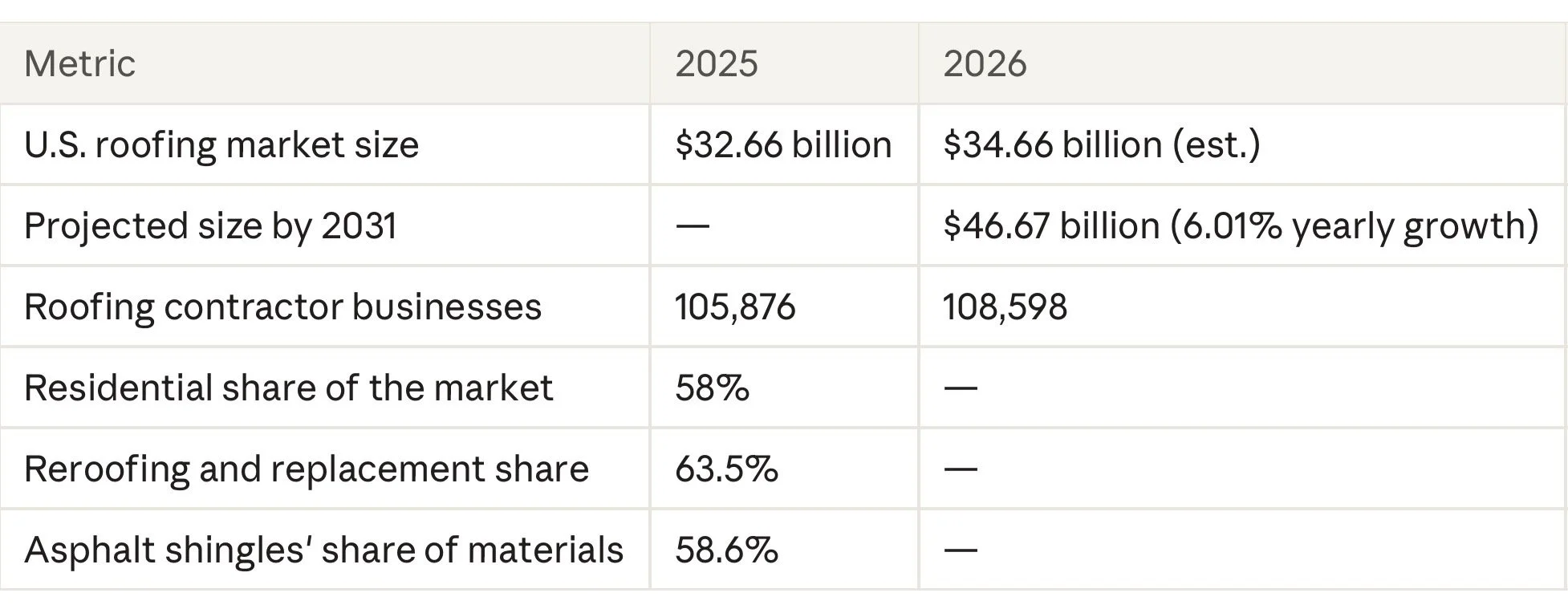
A quick note: market-size estimates vary a lot depending on who's counting and what they include. Treat these as directional, not exact.
Contractors are mostly upbeat. In Roofing Contractor's 2026 State of the Industry survey, most of the nearly 200 respondents said they expect 2026 to beat 2025 ([IRE panel recap](https://www.roofingcontractor.com/articles/101796-roofing-leaders-size-up-2026-at-ire-keynote-panel)), and 66% of commercial roofers reported higher sales in 2025 (Roofing Contractor).
6 roofing trends shaping 2025–2026
1. Materials keep getting pricier. The big shingle makers raised prices again in early 2026, and asphalt shingle prices are up roughly 41% since 2020 (Fixr). Insurance-industry data from Verisk shows roofing material costs rose 1.48% nationally in 2025, but swung wildly by state, from up 10.37% in Nevada to down 15.80% in New Hampshire (Insurance Journal).
2. Tariffs are hitting metal parts. Tariffs on imported steel and aluminum have pushed up costs for metal roofing, flashing, drip edge and gutters, and added uncertainty to project timelines (Roofing Contractor).
3. The labor crunch isn't going away. Roofing firms ran about a 12% job vacancy rate in 2025 even after raising wages to around $28 an hour, and lead times of 8 to 12 weeks are causing some owners to delay projects (Mordor Intelligence). Stricter immigration enforcement has made hiring even harder for many crews.
4. Architectural shingles are now the norm. Owens Corning reports laminate (architectural) products make up 95% of shingle demand, so the old 3-tab shingle is fading fast (Mordor Intelligence).
5. Commercial roofing is the growth leader. Commercial roofing is projected to grow about 8% a year through 2031, with single-ply membranes leading the way (Mordor Intelligence).
6. Busy backlogs. In the Q1 2026 Market Index Survey for Reroofing, 36% of respondents saw more customer inquiries than a year earlier, and more firms reported backlogs of three months or longer (Roofers Coffee Shop).
Roof insurance claims: fewer claims, bigger checks
Roof claim volume fell about 20% in 2025, mostly because of a quiet hurricane season. But the cost per claim jumped, according to Verisk's 2026 U.S. Roof Report (Insurance Journal):
• Average roof replacement on a claim: $17,631, up 33% from the 2021–2024 average
• Average roof repair on a claim: $4,699, up 25%
• Total residential roof claim value: $23 billion, down from a $24.4 billion average in 2021–2024
• Roofs in the claims mix: roofing makes up about 30% of all line items in property claim estimates
• Condition matters: roofs in moderate to poor shape carry about 60% higher loss costs, and 38% of U.S. homes fall in that group
Hail is the big one. Sixteen states saw severe hail hit more than 20% of their roofs in 2025, up from 12 in 2024. Arkansas, Kansas, Nebraska, Oklahoma and South Dakota were among the hardest hit. Everyday storms matter too: non-catastrophe wind and hail claims grew from 17% to 25% of all residential claims between 2022 and 2024 (Insurance Business).
2026 so far has been calmer. Aon put U.S. severe convective storm insured losses at about $27 billion in the first half of 2026, compared with more than $40 billion in each of the first halves of 2023 to 2025 (Business Insurance). Even so, 2026 is the 11th straight year these storms have cost insurers over $20 billion (Insurance Business).
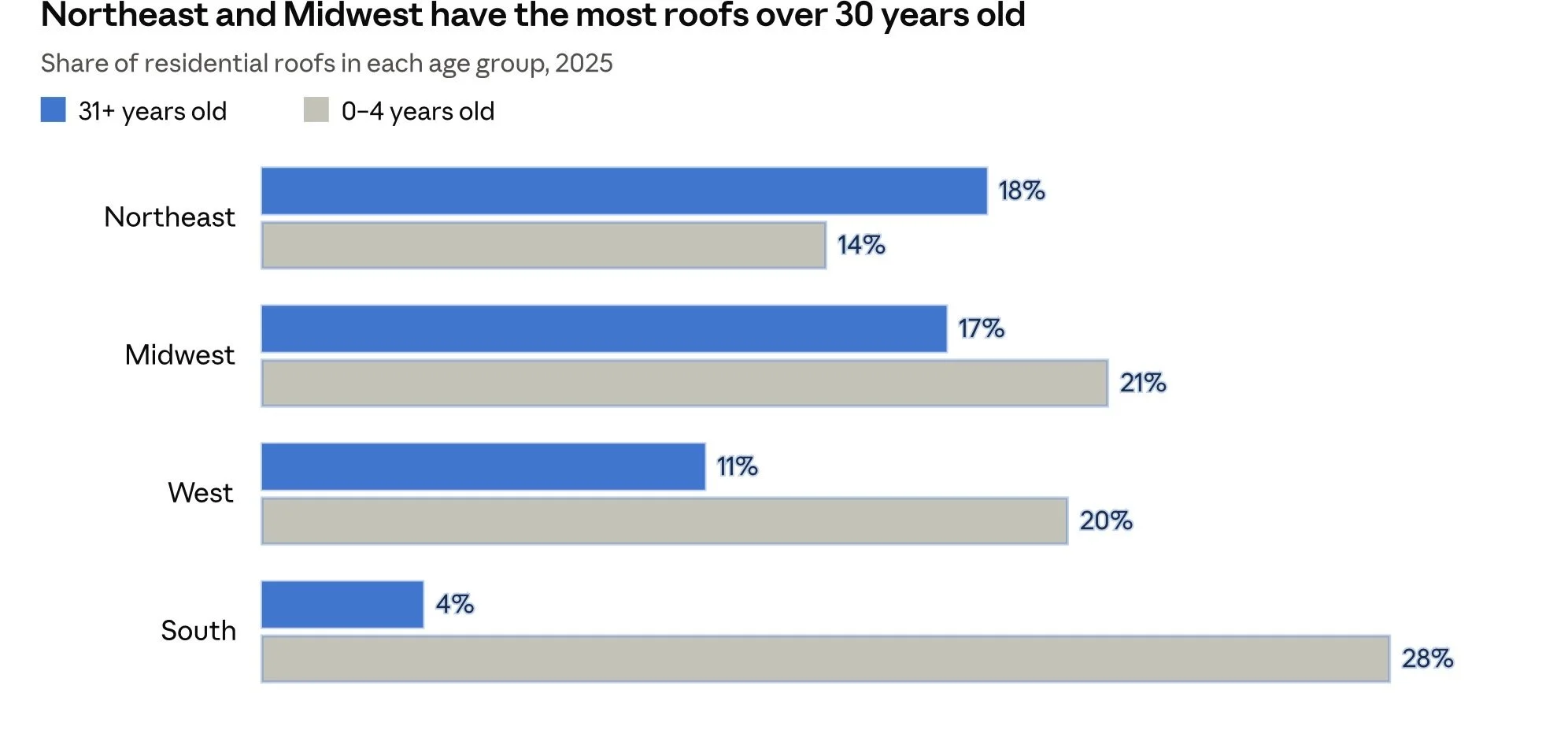
Verisk 2026 U.S. Roof Report, via Insurance Journal · four U.S. Census regions, 2025
Where your home is matters. Hail-prone states replace roofs faster: 57% of homes there have roofs nine years old or newer, versus 38% elsewhere. Older roofs in the Northeast and Midwest are the ones insurers are watching most closely.
Policies are getting stricter on older roofs. Many insurers now pay actual cash value (ACV) instead of full replacement cost once a roof hits 10 to 16 years, depending on the carrier (Ohio Insurance Agents). Some use payment schedules that drop to roughly 60% of the payout at 11–15 years and 40% at 16–20 years (Fixr). And as of March 2026, Fannie Mae and Freddie Mac accept ACV roof coverage on single-family homes, which could make these policies even more common (WebCE).
Roof warranty claims: why so many get denied
Most roof warranty claims are denied because of how the roof was installed or ventilated, not because the shingles were bad. Manufacturers don't publish national claim or denial rates, but warranty guides from contractors and inspectors point to the same culprits again and again.
First, it helps to know the two warranties every roof should have (NRCIA):
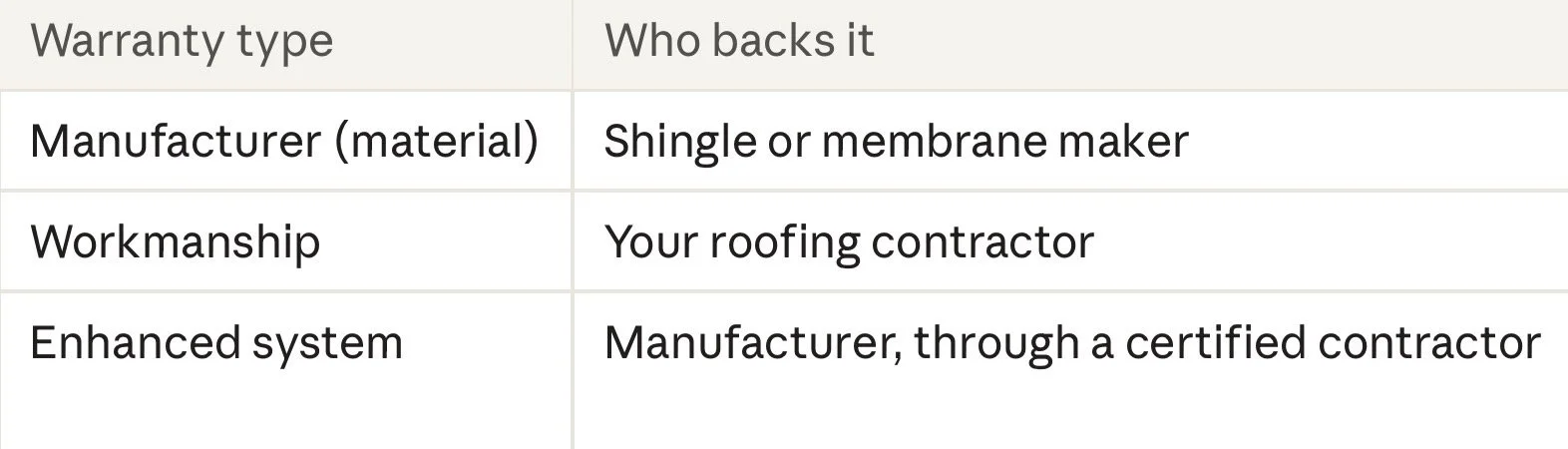
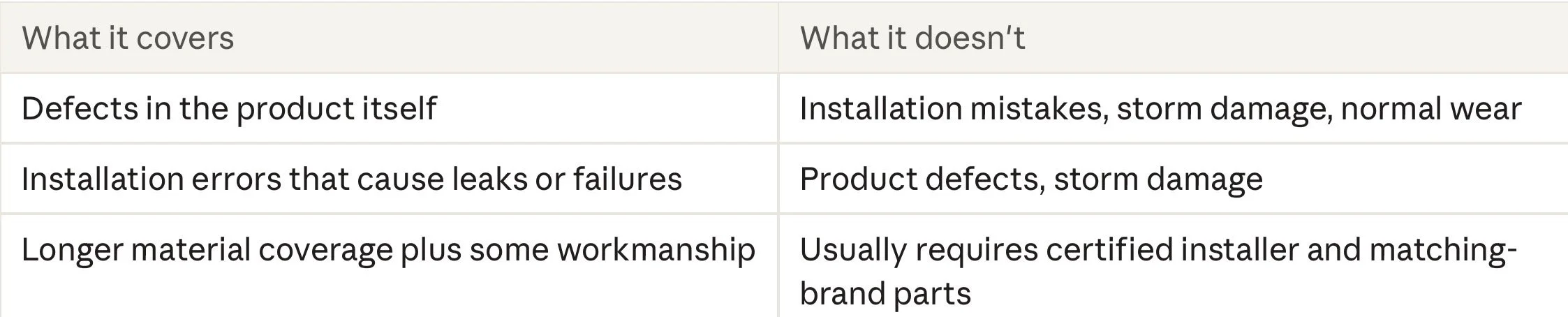
Storm damage like hail and wind is almost always an insurance claim, not a warranty claim.
The most common reasons warranty claims get denied:
1. Poor attic ventilation. This is widely cited as the top reason manufacturers deny shingle claims. Building code generally calls for 1 square foot of net free vent area per 150 square feet of attic floor, or 1:300 with balanced intake and exhaust (IBEX Roof).
2. Installation that doesn't follow the manufacturer's specs. Wrong nail count or placement, missing starter strips, skipped ice-and-water shield, or bad flashing (Craig Gouker Roofing).
3. Mixing brands. Enhanced warranties often require the maker's own underlayment, starter, hip and ridge, and vents.
4. Never registering the warranty. Many enhanced warranties must be registered within a set window.
5. Later changes to the roof. New solar panels, skylights or satellite dishes that aren't properly flashed can void coverage (Happy Roofing).
6. Missing paperwork. No receipts, install photos or maintenance records can sink a valid claim.
One more thing to know: "lifetime" warranties often only cover manufacturing defects, which get harder to prove about 10 years after installation (IBEX Roof).
What this means for homeowners
Your roof's age and condition now affect your insurance almost as much as your wallet. A few simple steps go a long way:
• Check your policy's roof terms. Look for "actual cash value" or a roof payment schedule, and ask your agent what happens at your roof's current age. Some carriers offer a buy-back endorsement for full replacement cost.
• Get an inspection before problems start. A professional roof inspection averages about $252 nationally in 2026 (Fixr), far less than a denied claim.
• Budget realistically. Fixr puts a typical 2026 asphalt-shingle replacement at about $11,450, with most homeowners paying $8,700 to $16,200 (Fixr). Larger or storm-damaged jobs run higher.
• Book early. With 8 to 12 week lead times in many markets, waiting until peak season can mean waiting a while.
• Protect your warranty. Hire a manufacturer-certified contractor, make sure your attic ventilation is checked, register the warranty, and keep every receipt and photo.
• After a storm, document fast. Take photos, and call your insurer before making anything but emergency repairs.
What this means for contractors
Demand is solid, but margins and crews are under pressure. Here's where to focus:
• Build price protection into bids. With shingle increases and metal tariffs, short quote expiration windows and material escalation clauses help keep a job profitable.
• Use older roofs as a conversation starter. Homeowners facing ACV coverage or non-renewal on 15- to 20-year-old roofs are motivated buyers. A condition report helps them talk to their insurer.
• Make ventilation part of every job. Since it's the top reason warranty claims are denied, checking and correcting intake and exhaust protects your customer and your reputation.
• Document everything. Time-stamped install photos, brand-matched components and proper nailing in high-wind zones are what get claims approved.
• Get certified. Manufacturer certification unlocks enhanced warranties that homeowners increasingly ask for.
• Invest in your people. With roughly 12% of roofing jobs unfilled, training, retention and efficient scheduling are a real competitive edge.
• Watch the hail map. Large hail shifts a lot year to year at the metro level, so storm demand can pop up in places that were quiet last season (Insurance Journal).
The bottom line
Roofing in 2025 and 2026 comes down to this: roofs cost more to fix, insurers are watching roof age closely, and most warranty problems trace back to installation and ventilation. Homeowners who keep their roof in good shape and understand their policy will save money. Contractors who price carefully, document their work and install to spec will win more jobs and fewer callbacks.
Have questions about your roof, your insurance claim, or your warranty? Reach out. We're always happy to help.
Sources
• Mordor Intelligence: United States Roofing Market
• IBISWorld: Roofing Contractors in the US, Number of Businesses
• Insurance Journal: Roof Costs Soar Even as Claims Decline (Verisk 2026 U.S. Roof Report)
• Insurance Business: Roof claims severity hits record highs
• Business Insurance: Global insured cat losses fall 56% in first half (Aon)
• Insurance Business: KCC projects below-average US severe convective storm losses for 2026
• Roofing Contractor: 2026 State of the Roofing Industry Report
• Roofing Contractor: Roofing Leaders Size Up 2026 at IRE Keynote Panel
• Roofing Contractor: Roofing Industry Q&A 2026, Hover
• Roofers Coffee Shop: Roofing at the start of 2026
• Fixr: The Biggest Challenges Roofers Face in 2026
• Fixr: Why Insurers Are Cracking Down on 15–20 Year Old Roofs
• Ohio Insurance Agents: Analyzing Roofing Policy Changes in Homeowners Insurance
• WebCE: Lender Changes to Residential Roofs
• NRCIA: Does a Roof Warranty Cover Leaks?
• IBEX Roof: Roof Warranties Explained
• Craig Gouker Roofing: What Do Shingle Warranties Usually Cover?
• Happy Roofing: 5 Mistakes Homeowners Make That Can Void Your Roof Warranty